
Smart Pills, Smart Healthcare
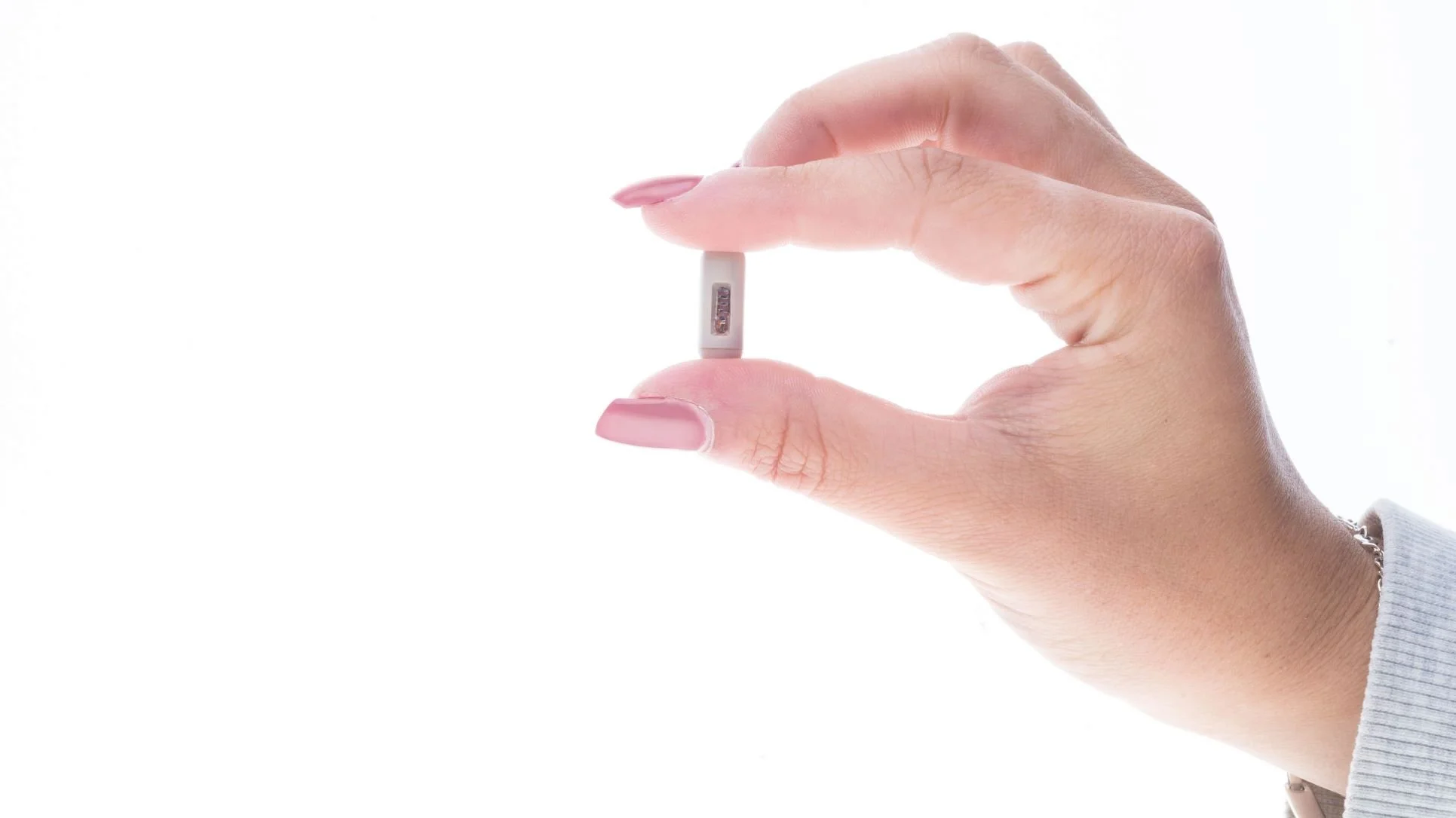
The first “digital pills” were invented in 1957. They used radio frequencies to transmit pressure and temperature readings from inside the stomach. These early devices were for proof of concept only, and never went into common use. Though the test was successful, the next major step for ingestible electronics wouldn’t come until 60 years later, when the FDA approved Aripiprazole (Abilify), which is used to treat schizophrenia. The pills contain a sensor activated by acid in the stomach. A patch worn on the rib cage picks up the sensor’s signal and transmits it to a smartphone app, allowing patients to record their medication compliance and share that information with their doctors and caregivers.
The goal of Abilify was to improve patients’ adherence to their treatment protocol. But monitoring compliance is just one of the ways in which ingestible electronics can potentially improve healthcare. Although numerous challenges exist when it comes to production and implementation, the technology shows great and diverse promise.
And with the convergence of new biosensing technologies, microelectronics, and new developments in materials science, many believe that ingestible electronics are entering an exciting new developmental phase.
Uses for Ingestible Electronics
In addition to monitoring adherence, ingestible electronics show promise in terms of improving treatment outcomes, disease diagnosis, early disease detection, remote medicine, and personalization of medical care.
Early Detection
Devices that can perform real time, in situ body fluid analysis and monitoring of parameters like pH, pressure, and temperature have already demonstrated substantial diagnostic value when it comes to the GI tract. Since 2010, much research has focused on biochemical sensing. The first capsule endoscope was approved by the FDA in 2023. Future developments in biosensing could potentially significantly enhance diagnostic accuracy. By collecting specific data about the digestive tract, doctors could potentially identify early signs of disease, leading to earlier treatment and better outcomes. As our understanding of the role of intestinal microbiota increases, ingestible devices could be an important tool for collecting this information as well.
Non-Invasive Diagnosis
Diagnosing digestive disorders can be challenging. Not to mention the fact that many diagnostic procedures are invasive. Procedures such as capsule endoscopy, in which patients swallow a capsule that contains a camera, battery, light source, and transmitter, are making diagnosis easier for patients and more accurate for practitioners. In addition to being literally and figuratively easier to swallow, ingestible diagnostic devices have the potential to make diagnosis more affordable and more accessible, as they do not require anaesthesia, and can be done on an outpatient basis. In addition, the non-invasive nature of the device can reduce the danger of infection.
Improving Treatment Outcomes
The sensor, patch, and app combination used with Abilify allows patients and doctors to track medication compliance. However, a 2022 study identified another way in which this type of system can help. In this study, HIV patients took an antiretroviral drug equipped with sensors, which texted them in the event of a missed dose. This improved patient compliance, and, as a result, patient outcomes.
Post Surgical Monitoring
After surgery, checkups and tests are the standard for monitoring healing and recovery. Not only do ingestible sensors mean less time spent in the doctor’s office, but they can also detect early signs of post-surgical complications like infection, organ rejection, and internal bleeding, that a traditional examination might miss.
Personalized Medicine
The earliest ingestibles collected information about pressure and temperature. The recently-approved capsule endoscope records images of the GI tract, and can take biopsies and deliver medication as well. Future devices will be able to capture more and more detailed information about many of the body’s systems. Practitioners may eventually be able to use that information to craft personalized treatment plans for their patients, based on patients’ unique medical histories and specific needs.
Improving Access and Affordability
Remote technologies like telemedicine bring the point of care to the patient, which can improve care in remote and underserved areas by making it more accessible, and potentially cheaper. Ingestible devices can be part of that solution. Transmitting real-time data to healthcare providers allows providers to act quickly when necessary, but eliminates the need to keep patients under observation in a medical setting under normal circumstances.
Challenges
As with all new technologies, there are barriers to overcome before ingestible electronics can reach their full potential in the real world.
Cost
As always, cost can be a significant barrier to implementation. At this early stage of development, many of the requisite sensors are expensive. Hopefully, mass production of ingestible devices, coupled with developments in materials science, will help to bring the prices down.
Data Privacy Concerns
The continuous transmission of sensitive health information is a significant concern. Not only is this a concern for privacy, but there is also the danger of hacking or misuse of that data. New designs will have to anticipate security concerns and build data security into each new device.
Power Consumption
Different ingestibles will have different power needs, depending on how long they are intended to stay in the body. And this can affect the size and complexity of the device. Devices designed for short term use must be small enough to pass through the digestive system easily, yet carry sufficient power to operate over a period of hours. Devices designed for medium term use, that is, days to weeks, will need to be able to harvest energy during that time. And devices designed to be in use for months and longer will need to not only create their own power, but also to resist corrosion, fatigue, and moisture.
Materials Safety
Above all, ingestible devices must be safe. They must be large and strong enough to resist the pressures of the digestive system, yet small enough to pass through it without harming sensitive tissues. Materials must be safe for human consumption and must resist degradation. Furthermore, devices must be built to minimize tissue heating.
Robustness
The digestive tract is a harsh environment. It’s humid, corrosive, conducive to fatigue, and the sensitive tissues are built for absorption. While some ingestible devices are built to degrade, others are built to pass through. In any event, all ingestible devices will need to be built robustly enough to survive in this unique environment.